


Renovating a full house in Dubai is one of the most rewarding upgrades a homeowner can make, but it is also one of the easiest projects to underestimate. The cost to renovate entire house spaces depends on more than square footage. The final budget is shaped by the property type, the existing condition, the scope of work, authority approvals, materials, contractor quality, and how many changes happen after work begins.
In Dubai, this matters even more because homes vary widely. A villa in Arabian Ranches may need landscaping, exterior repainting, waterproofing, and AC improvements, while an apartment in Downtown Dubai may involve building management approvals, service elevator bookings, and strict working hours. Two properties with the same size can have very different renovation costs.
This guide focuses on the key factors that move your budget up or down, so you can plan realistically before requesting quotations.
What is included in an entire house renovation?
An entire house renovation usually covers most or all visible and functional parts of the home. It may include flooring, walls, ceilings, kitchens, bathrooms, doors, wardrobes, lighting, electrical upgrades, plumbing, painting, waterproofing, AC adjustments, carpentry, and exterior or garden work for villas.
The word entire is important. A simple cosmetic refresh is not the same as a full remodel. Repainting a villa, replacing a few tiles, and updating light fixtures is a very different project from stripping out bathrooms, redesigning the kitchen, rerouting plumbing, replacing flooring, installing custom joinery, and upgrading outdoor areas.
For homeowners who want a more detailed price comparison by property type, Renovate UAE has a separate home renovation Dubai cost guide that breaks down villa and apartment renovation budgets in more depth.
Typical budget levels in Dubai
Every home needs a site inspection before an accurate estimate is possible, but broad budget bands can help you understand where your project might fall. The table below shows how renovation levels usually differ.
| Renovation level | Typical scope | Budget impact |
|---|---|---|
| Basic refresh | Painting, minor repairs, light fixture changes, limited carpentry, small bathroom or kitchen updates | Lower cost, faster timeline, fewer hidden works |
| Standard full renovation | New flooring, kitchen upgrade, bathroom remodeling, electrical and plumbing improvements, ceiling and lighting work, painting | Moderate to high cost depending on size and finishes |
| Premium renovation | Custom joinery, upgraded kitchen and bathrooms, better tiles and sanitaryware, smart lighting, feature walls, improved AC and layouts | Higher cost due to materials, labor detail, and coordination |
| Luxury transformation | Major layout changes, structural or civil works, imported finishes, full villa exterior, landscaping, high-end interiors, bespoke design | Highest cost, longer timeline, more approvals and specialist trades |
A common mistake is comparing only total quotes without checking the scope behind them. One contractor may include waterproofing, disposal, site protection, MEP checks, and finishing details, while another may exclude them. The cheaper quote may become more expensive once variations are added.
Key factor 1: Property size and built-up area
Size is the first cost driver because larger homes require more materials, labor, supervision, waste removal, and time. More rooms mean more flooring, more paint, more doors, more lighting points, and more coordination.
However, size does not work alone. A compact luxury apartment with marble flooring, custom wardrobes, and premium bathrooms can cost more than a larger villa receiving a basic refresh. The best way to use size is as a starting point, not as the final answer.
For villas, built-up area is only part of the picture. Outdoor space, boundary walls, swimming pool areas, pergolas, driveways, garden lighting, irrigation, and landscaping can add significantly to the overall budget. If you are renovating a villa, it is worth comparing your plans with a dedicated villa renovation cost guide for Dubai before finalizing your budget.
Key factor 2: Existing condition of the home
The current condition of the property can change the cost dramatically. A newer home that only needs design upgrades is usually easier to price. An older villa or apartment may reveal issues once demolition starts.
Hidden cost drivers often include:
- Damaged waterproofing in bathrooms, balconies, or roof areas
- Old plumbing lines that should be replaced before installing new tiles
- Electrical wiring that does not support the new lighting or appliance plan
- Uneven floors or walls that need leveling before finishes can be applied
- AC ducting, insulation, or drainage issues
- Moisture damage, cracks, or poor previous workmanship
These items are not always visible during a first walkthrough, but experienced renovation teams know where to inspect. A proper site visit helps reduce surprises and creates a more realistic estimate.
Key factor 3: Scope of civil, electrical, and plumbing work
Civil work, electrical work, and plumbing are major budget influencers because they affect the structure and function of the home. Moving a wall, relocating a kitchen sink, adding new bathroom points, or changing electrical layouts is more complex than replacing finishes in the same position.
A renovation becomes more expensive when it involves breaking, chasing, rerouting, waterproofing, testing, and reinstating surfaces. These works also require careful sequencing. For example, plumbing and electrical changes must happen before tiling, ceiling closure, painting, and cabinetry installation.
If your goal is to control cost, keep wet areas such as kitchens and bathrooms in their existing locations where possible. You can still achieve a fresh look through better materials, lighting, storage, and fixtures without moving every service line.
Key factor 4: Kitchens and bathrooms
Kitchens and bathrooms usually represent a large share of the full house renovation budget. They require multiple trades, including plumbing, electrical, waterproofing, tiling, carpentry, stone or countertop fabrication, glass, lighting, and fixture installation.
Kitchen costs rise when you add custom cabinets, premium countertops, built-in appliances, island counters, pantry storage, soft-close hardware, and under-cabinet lighting. Bathroom costs rise with large-format tiles, concealed mixers, wall-hung toilets, custom vanities, glass partitions, niche shelves, premium sanitaryware, and high-quality waterproofing systems.
Cutting corners in these spaces can be risky. Poor waterproofing or rushed plumbing may not show problems immediately, but leaks and moisture damage can become expensive later. A balanced approach is to invest in reliable hidden works first, then choose visible finishes that match your budget.
Key factor 5: Finish level and material selection
The same room can be renovated at very different price points depending on materials. Flooring is a clear example. Porcelain tile, engineered wood, marble, microcement, and luxury vinyl all have different purchase prices, installation requirements, maintenance needs, and waste factors.
Finish level also affects labor. Large-format tiles, bookmatched stone, curved joinery, decorative wall panels, and detailed ceiling features need more skilled workmanship and more time. Premium work is not just about buying expensive materials. It is also about correct installation.
| Cost area | Lower-cost choice | Higher-cost choice | Why it affects budget |
|---|---|---|---|
| Flooring | Standard tiles or vinyl | Marble, engineered wood, large-format porcelain | Material price, subfloor preparation, installation skill |
| Walls | Paint refresh | Feature panels, wallpaper, cladding, decorative plaster | More labor, specialist finishes, surface preparation |
| Carpentry | Ready-made units | Custom wardrobes, TV walls, kitchen joinery | Design, fabrication, hardware, installation time |
| Lighting | Basic fixtures | Layered lighting, coves, smart controls | Wiring, ceiling work, control systems |
| Bathrooms | Standard sanitaryware | Concealed systems, premium mixers, glass, stone | Plumbing complexity, waterproofing, finish precision |
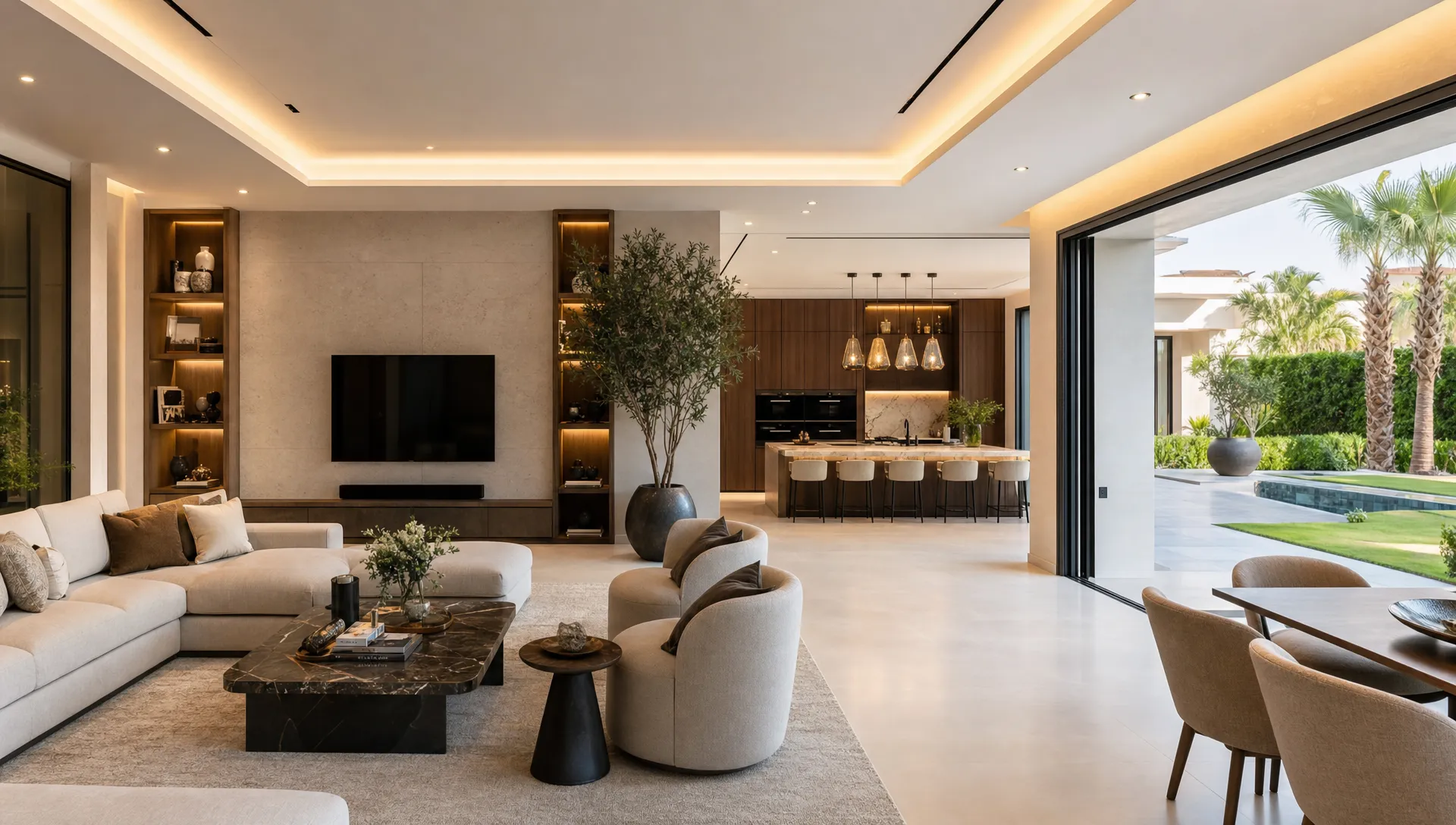
Key factor 6: Approvals, community rules, and building restrictions
Approvals are a major part of renovation planning in Dubai. Depending on the property and scope, you may need permissions from the developer, community management, building management, or relevant authorities. Works affecting structure, facade, drainage, electrical load, fire safety, or common areas can require extra review.
For many construction and building-related activities, Dubai Municipality is an important authority. Projects involving electrical and water connections may also need to consider DEWA requirements. In apartments, the owners association or building management may also control working hours, noise, elevator use, waste removal, and contractor access.
Approvals can influence both cost and timeline. A well-prepared contractor will factor these steps into the project plan instead of treating them as an afterthought.
Key factor 7: Timeline and project sequencing
A full house renovation involves many moving parts. Demolition must happen before rough plumbing and electrical work. Waterproofing must be tested before tiles. Cabinets must be measured after floor and wall levels are confirmed. Painting must be coordinated around ceilings, doors, joinery, and final fixtures.
When sequencing is poor, costs increase. Trades wait for each other, materials arrive too early or too late, finished surfaces get damaged, and rework becomes necessary. A realistic timeline protects both budget and quality.
The timeline also depends on whether the home is vacant. Renovating while living in the property can be possible for smaller scopes, but a full house renovation is usually smoother when the property is empty. If you stay in the home, the contractor may need to phase work room by room, which can extend the schedule and add coordination costs.
Key factor 8: Contractor quality and quotation detail
The contractor you choose has a direct effect on the final cost. A professional renovation quotation should clearly state what is included, what is excluded, what materials are assumed, and how variations will be handled.
A vague quote may look attractive at first, but it can create disagreements during the project. For example, painting may be included, but surface repair may not. Tiling may be included, but tile supply, leveling, waterproofing, skirting, or edge trims may be excluded. Kitchen installation may be included, but appliances, countertops, sink, mixer, or lighting may be separate.
Look for clarity in these areas:
- Scope of demolition, disposal, and site protection
- Brand or specification of major materials where possible
- Electrical, plumbing, AC, and waterproofing responsibilities
- Payment stages linked to progress
- Timeline assumptions and approval dependencies
- Warranty or defect correction terms
A detailed quote does not always mean the lowest quote, but it usually gives you better control over the real final cost.
Key factor 9: Design decisions and changes during construction
Design changes after work begins are one of the fastest ways to increase renovation cost. Changing tile selections, moving sockets, resizing cabinets, adding ceiling features, or upgrading sanitaryware after procurement can affect materials, labor, and schedule.
This does not mean every decision must be final before the first site visit. It does mean the main layout, finish direction, and priority areas should be agreed early. Homeowners who invest time in planning usually face fewer variations and less stress.
If you are still in the planning phase, Renovate UAE’s guide to entire home renovation planning tips can help you organize priorities before requesting final estimates.
How to build a realistic full house renovation budget
A realistic budget starts with a clear brief. Decide whether you want a cosmetic update, a practical family upgrade, a premium interior transformation, or a luxury renovation. Each goal has a different cost profile.
Next, separate must-haves from nice-to-haves. Must-haves may include waterproofing, plumbing replacement, electrical safety, damaged flooring, or a functional kitchen. Nice-to-haves may include decorative panels, imported lighting, premium stone, or full smart home integration.
It is also wise to set aside a contingency. Even with good planning, older homes can reveal hidden issues. A contingency gives you flexibility without forcing poor decisions midway through the project.
A practical budgeting process looks like this:
- Inspect the property properly: Check walls, floors, ceilings, bathrooms, roof areas, AC, plumbing, electrical points, and outdoor spaces before setting the budget.
- Define the renovation scope: List every area included, from kitchen and bathrooms to bedrooms, landscaping, painting, lighting, and carpentry.
- Choose a finish level: Decide whether your target is standard, premium, or luxury before comparing quotes.
- Request a detailed estimate: Ask for a scope-based quotation rather than a single lump sum with limited explanation.
- Plan approvals early: Confirm community, building, and authority requirements before work starts.
Where homeowners often overspend
Many renovation budgets increase because the early estimate was based on incomplete information. The most common overspending happens when homeowners start with a visual design but ignore hidden works. New marble flooring will not solve an old waterproofing problem. A beautiful kitchen will not perform well if electrical capacity, plumbing, and ventilation are not planned correctly.
Another common issue is upgrading materials one decision at a time. A slightly better tile, a better countertop, better fixtures, more lighting, and extra storage can each feel manageable separately. Together, they may push the project into a higher budget category.
The solution is not to avoid upgrades. The solution is to prioritize. Spend more where it affects durability, comfort, and long-term value. Be more flexible in areas that are easier to update later, such as loose furniture, decor, and accessories.
Frequently Asked Questions
How much does it cost to renovate an entire house in Dubai? The cost depends on property size, scope, condition, materials, approvals, and finish level. A basic refresh costs far less than a full luxury transformation with civil work, kitchen and bathroom remodeling, custom joinery, exterior upgrades, and landscaping. A site visit is the best way to get an accurate estimate.
What is the biggest cost in a full house renovation? Kitchens, bathrooms, MEP works, custom carpentry, flooring, and premium finishes are usually the biggest cost drivers. In villas, exterior work, waterproofing, landscaping, boundary walls, and outdoor lighting can also add significantly to the budget.
Do I need approvals to renovate a house in Dubai? Many projects require approvals, especially if they involve structural changes, plumbing relocation, electrical upgrades, facade changes, or work in apartments and managed communities. Requirements vary by property, developer, building management, and authority rules.
Is it cheaper to renovate the whole house at once or in phases? Renovating everything at once can reduce repeated mobilization, protection, and coordination costs. Phased renovation can help with cash flow, but it may extend the timeline and create extra disruption. The best option depends on your budget, living arrangements, and scope.
How can I reduce renovation costs without lowering quality? Keep major plumbing locations where possible, finalize decisions early, choose durable mid-range materials, avoid unnecessary layout changes, and work with a contractor who provides a detailed scope. Do not cut corners on waterproofing, electrical safety, or plumbing.
Plan your renovation with a clear estimate
The cost to renovate an entire house in Dubai is not defined by one number. It is shaped by the decisions you make before work begins: what you renovate, how deeply you renovate it, which materials you choose, and how well the project is planned.
Renovate UAE provides customized renovation solutions for villas, homes, apartments, offices, and commercial spaces across the UAE, including interior design, kitchen and bathroom upgrades, civil work, electrical and plumbing, carpentry, painting, and landscaping.
If you are planning a full renovation, start with a professional assessment. Book a free site visit and estimate with Renovate UAE to understand your property, your options, and the budget needed to transform your space with confidence.