


An entire home renovation can transform how your home looks, functions, and feels every day. It can also become stressful if decisions are made too late, approvals are missed, or different trades start working without a clear sequence. The smoother builds are not usually the ones with no surprises at all. They are the ones planned well enough that surprises can be managed without derailing the project.
For UAE homeowners, planning matters even more because villas, townhouses, apartments, and gated communities can all have different approval rules, access restrictions, service locations, and finishing expectations. Whether you are upgrading a family villa in Dubai, remodeling an apartment, or refreshing a full property before moving in, the tips below will help you prepare a clearer brief, reduce delays, and make better decisions before work begins.
Start with the outcome, not the demolition
Before discussing walls, tiles, lighting, or carpentry, define what success looks like. A full renovation should solve lifestyle problems, not only replace old finishes. For example, a beautiful kitchen may still disappoint if it does not improve storage, circulation, ventilation, or the way your family cooks and entertains.
Walk through the property and ask practical questions. Which rooms feel too dark? Where does clutter build up? Which bathrooms cause morning delays? Which outdoor areas are unused because they lack shade, privacy, or proper flooring? These answers help shape a renovation brief that is based on daily life rather than isolated design ideas.
A helpful brief should describe priorities in plain language. It should include the rooms being renovated, the must-have changes, the areas where you are flexible, and the quality level you expect. If you are still deciding how to align your renovation with your lifestyle, this guide to custom home renovations that match your lifestyle offers a useful way to think beyond surface finishes.
Separate needs, upgrades, and nice-to-haves
One of the fastest ways to lose control of an entire home renovation is to treat every idea as equally important. A smoother build starts with clear priorities. This makes budgeting easier, helps the contractor plan procurement, and prevents emotional decisions when the site is already active.
Use three simple categories:
- Needs: Essential repairs, safety upgrades, waterproofing, electrical improvements, plumbing fixes, layout corrections, and items required for comfortable daily use.
- Value upgrades: Improvements that raise usability, appeal, or long-term property value, such as kitchen remodeling, bathroom upgrades, improved lighting, storage, flooring, and outdoor enhancements.
- Nice-to-haves: Features that would be enjoyable but can be adjusted, delayed, or removed if the budget or schedule needs protection.
This does not mean avoiding luxury. It means giving luxury a proper framework. A statement entrance, custom joinery, premium bathroom finishes, and elegant lighting can all be planned successfully when the essentials are protected first.
Inspect the property before finalizing the design
A design that ignores site conditions can create expensive changes later. Before committing to a final layout or finish selection, arrange a detailed site inspection. In villas, this may include the roof, façade, waterproofing, drainage, garden levels, boundary walls, electrical capacity, plumbing routes, and AC provisions. In apartments, it may include slab limitations, wet-area locations, building service shafts, access rules, and management requirements.
This step is especially important if the property is older, has had previous modifications, or has visible signs of leakage, cracking, dampness, uneven flooring, or electrical issues. Cosmetic renovation can hide problems temporarily, but it does not solve them. A good planning process identifies what must be repaired before new finishes are installed.
| Area to inspect | What to check | Why it affects the build |
|---|---|---|
| Structure and walls | Cracks, load-bearing elements, previous alterations | Prevents unsafe layout changes and rework |
| Plumbing and drainage | Pipe condition, water pressure, leakage points, floor traps | Protects bathrooms, kitchens, and wet areas |
| Electrical systems | Load capacity, old wiring, DB condition, outlet locations | Supports appliances, lighting, AC, and smart systems |
| Waterproofing | Roofs, balconies, bathrooms, wet rooms, exterior joints | Reduces risk of future leaks and finish damage |
| Doors, windows, and façade | Sealing, alignment, heat gain, community rules | Improves comfort and avoids approval issues |
Build the budget around scope, not guesswork
A realistic budget is not just a single number. It is a combination of scope, material choices, labor, approvals, temporary protection, waste removal, contingency, and possible variations. Homeowners often compare renovation estimates too quickly without checking whether the same items are included.
For a smoother build, ask for a quote that separates major work categories. Civil work, electrical, plumbing, HVAC-related provisions, carpentry, painting, flooring, bathrooms, kitchen work, landscaping, and finishing materials should be clearly described. This makes it easier to understand where the money is going and where adjustments can be made without compromising the whole project.
It is also wise to include a contingency allowance, especially for older properties or homes where hidden services may only be discovered after opening walls or floors. The goal is not to spend the contingency. The goal is to avoid panic if a legitimate issue appears during construction.
Confirm approvals before work starts
Approvals are a key part of renovation planning in the UAE. Depending on the property type and scope, you may need permission from a developer, community management, building management, municipality, or relevant service authority. Requirements can differ between Dubai, Abu Dhabi, Sharjah, and other emirates, and they can also differ between communities.
Common items that may trigger approval include structural changes, external façade modifications, extensions, boundary changes, major MEP rerouting, drainage changes, balcony work, and apartment wet-area alterations. Even when a change seems simple, your building or community may still require drawings, method statements, contractor documents, work permits, access approvals, or security coordination.
Do not leave approvals until after materials are ordered or demolition is scheduled. If the build cannot start on time because approvals are incomplete, the entire sequence may shift. For a wider UAE-focused overview of planning considerations, you may also find this full house remodeling guide for UAE homeowners helpful.
Sequence the work like a build, not a shopping list
An entire home renovation involves many trades working in the right order. Civil work affects plumbing. Plumbing affects waterproofing. Waterproofing affects tiling. Electrical planning affects ceilings, lighting, joinery, and appliances. If the sequence is wrong, finished areas may need to be opened again.
A well-organized renovation schedule usually moves from investigation and demolition to rough-in services, inspections, closing works, finishes, fixtures, testing, and handover. Some activities can overlap, but only when the site is ready and the overlap will not damage completed work.
| Phase | Main activities | Planning tip |
|---|---|---|
| Pre-construction | Final scope, drawings, approvals, material selection | Decide key finishes before site work begins |
| Site preparation | Protection, access setup, demolition, waste removal | Protect areas that are staying unchanged |
| Civil and MEP rough-in | Wall changes, plumbing, electrical, AC provisions | Confirm outlet, switch, drain, and appliance locations early |
| Waterproofing and closing | Wet-area waterproofing, screeds, ceiling closure, wall preparation | Test and inspect before covering services |
| Finishing | Tiles, flooring, paint, joinery, sanitaryware, lighting | Follow installation order to avoid damage |
| Snagging and handover | Testing, touch-ups, cleaning, documentation | Walk through room by room before final acceptance |
Decide materials before the site needs them
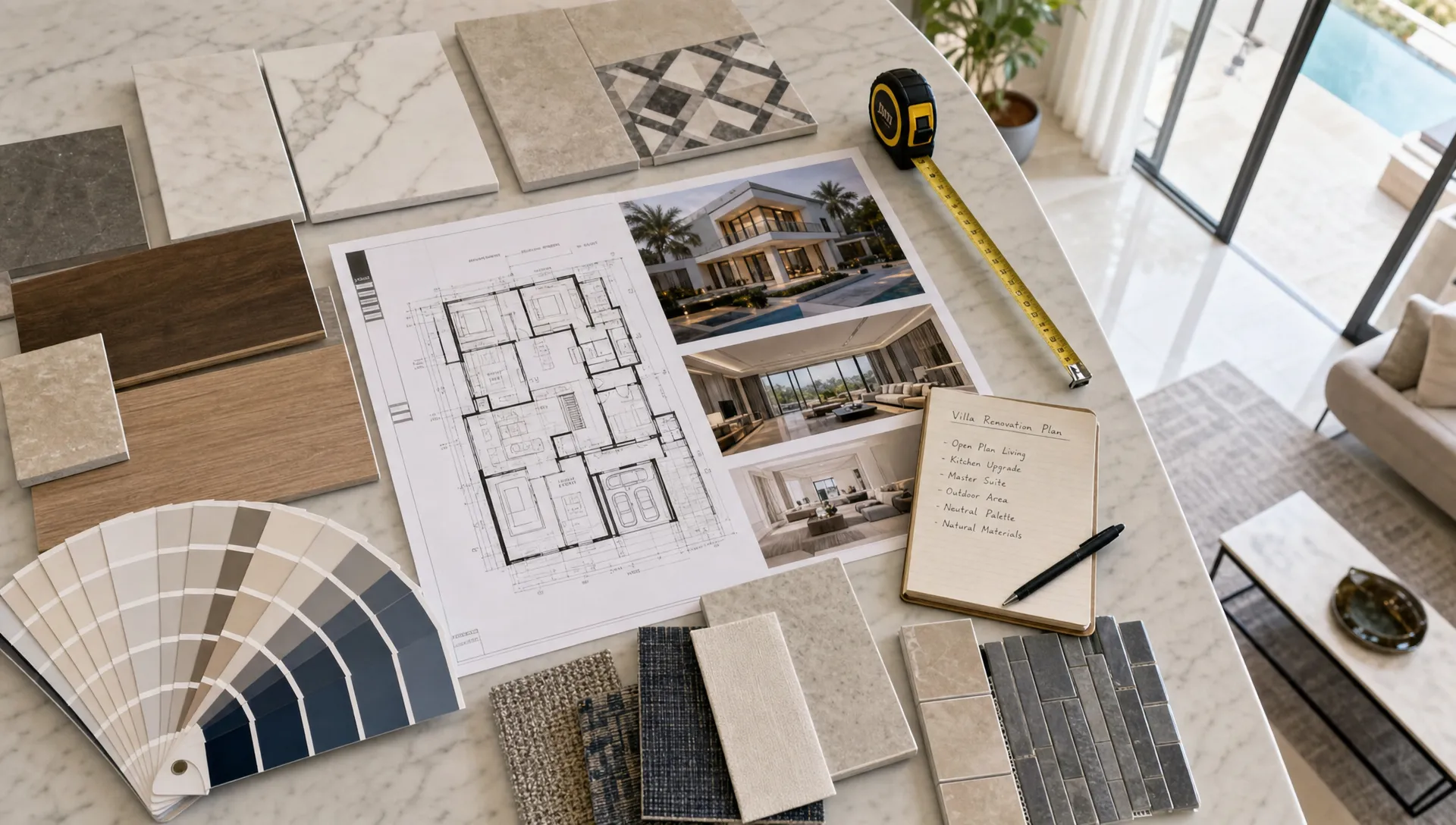
Late material decisions are one of the most common causes of renovation delays. Tiles, sanitaryware, kitchen finishes, lighting fixtures, door hardware, countertops, switches, and custom carpentry details all affect measurements and installation. If they are chosen too late, the contractor may have to pause work, change shop drawings, or revise completed preparations.
This is especially important for imported finishes or custom-made items. Even when a material is available locally, quantities, batch consistency, delivery schedules, and replacement availability should be checked. For tiles and flooring, ordering enough material from the same batch helps avoid visible shade differences. For bathrooms and kitchens, fixture dimensions should be confirmed before plumbing points are finalized.
You do not need to select every decorative accessory before construction starts, but you should lock in the materials that affect dimensions, waterproofing, MEP locations, and installation methods.
Plan where you will live during the renovation
A full home renovation can affect water, electricity, privacy, access, parking, dust levels, and daily routines. If you plan to stay in the property during the work, be realistic about what that means. Some phased renovations are possible, but they require careful isolation of work zones, temporary services, and clear safety boundaries.
For villas, it may be possible to renovate floor by floor or separate interior and exterior phases. For apartments, staying during major works is often more difficult because access, noise, dust, and service shutdowns are harder to isolate. If the home includes children, elderly family members, pets, or people working from home, temporary relocation may be the smoother and safer choice for certain stages.
Discuss this before work begins. Your contractor can plan protection, working hours, storage areas, and access routes more effectively if they know whether the property will be occupied.
Keep communication simple and documented
Renovation problems often come from unclear communication rather than poor workmanship alone. Verbal decisions made on-site can be forgotten, misunderstood, or interpreted differently by different trades. A smoother build needs one clear communication channel and a habit of documenting decisions.
Use written approvals for layout changes, material substitutions, added work, and cost variations. Keep drawings, finish schedules, approvals, and product selections organized. If a decision affects budget or timeline, it should be confirmed before the work proceeds.
Regular site meetings are also helpful, but they should be focused. Review progress against the schedule, confirm upcoming decisions, identify blockers, and agree on the next actions. This keeps the project moving and reduces last-minute surprises.
Choose the right renovation partner early
The contractor you choose will influence planning quality, site coordination, workmanship, and your overall experience. For an entire home renovation, look beyond the lowest quote. You need a team that can understand the full scope, coordinate civil work and MEP services, manage finishing trades, communicate clearly, and work within UAE property rules.
Ask how the contractor approaches site inspection, scheduling, approvals, material coordination, and variations. Review whether the quotation is detailed enough to compare properly. Check that the team understands the difference between a cosmetic refresh and a full build with multiple technical dependencies. Before making a final decision, this article on how to hire residential renovation contractors wisely can help you evaluate contractors with more confidence.
Prepare for snagging before handover
Snagging should not be treated as an afterthought. It is the final quality control stage where small defects, incomplete items, alignment issues, paint touch-ups, silicone finishing, door adjustments, fixture testing, and cleaning details are reviewed.
A good snagging process is room-by-room and system-by-system. Test switches, sockets, water pressure, drainage, exhaust fans, doors, drawers, cabinet hinges, lighting scenes, AC performance, and outdoor drainage where relevant. Take photos, record each item clearly, and agree on how and when it will be resolved.
The best time to think about snagging is at the beginning of the project. When everyone understands the expected finish level from the start, the final handover is much smoother.
Frequently Asked Questions
How early should I start planning an entire home renovation? Start planning as early as possible, especially if your project involves approvals, structural changes, imported materials, or custom joinery. Early planning gives you more time to finalize scope, compare estimates, select materials, and avoid rushed decisions.
Can I renovate my UAE home in phases? Yes, many homes can be renovated in phases, but it depends on the layout, services, and whether you plan to live in the property during the work. Phasing should be planned carefully so completed areas are protected and future work does not require unnecessary rework.
What causes the most delays in full home renovations? Common causes include late material selections, unclear scope, hidden site issues, approval delays, design changes during construction, and poor trade coordination. Most of these risks can be reduced with detailed planning before work begins.
Do I need approvals for interior renovation work? It depends on the property, emirate, community, and scope. Cosmetic updates may be simpler, while structural changes, external modifications, major electrical or plumbing work, and apartment wet-area changes often require approvals from relevant parties.
What should I include in my renovation brief? Include your goals, room-by-room scope, preferred style, must-have repairs, budget expectations, material preferences, timeline needs, occupancy plans, and any community or building restrictions you already know about.
Plan your renovation with a team that understands the full build
A smoother renovation begins with clear decisions, realistic sequencing, and the right technical support. Renovate UAE provides villa, home, apartment, and commercial renovation services across the UAE, including interior design, kitchen and bathroom upgrades, civil work, electrical and plumbing services, carpentry, painting, landscaping, and customized renovation solutions.
If you are preparing for an entire home renovation, book a free site visit and estimate with Renovate UAE. A professional walkthrough can help you clarify the scope, identify site risks, and plan the build with fewer surprises from day one.