


Interior remodeling in the UAE is about much more than choosing a new sofa or repainting the walls. A successful remodel has to respond to the way people live here: warm weather, bright sunlight, dust, air conditioning, family gatherings, visiting guests, multi-generational households, and the desire for interiors that feel elegant without becoming difficult to maintain.
Modern UAE homes also sit at an interesting design crossroads. Many homeowners want open, hotel-inspired spaces, but they still need privacy, storage, durable finishes, and practical layouts for everyday life. Whether you own a villa in Dubai, a townhouse in Sharjah, an apartment in Abu Dhabi, or a family home elsewhere in the Emirates, the best interior remodeling ideas are the ones that improve comfort, beauty, and long-term usability at the same time.
Below are practical, modern remodeling ideas that can help you create a home that feels refined, climate-ready, and tailored to UAE living.
Start With Lifestyle, Not Just Style
Before choosing marble, wall panels, or lighting fixtures, define how the home should work. A modern interior can look beautiful in a showroom, but it must support daily routines once people are actually living in it.
For UAE homes, this often means thinking through family zones, guest areas, formal and informal seating, cooking habits, storage needs, prayer areas, children’s spaces, staff rooms, laundry flow, and outdoor access. A family that hosts frequently may need a more generous majlis or dining area. A couple in a city apartment may prefer a flexible open-plan layout with concealed storage and a compact work-from-home corner.
This early planning stage helps avoid expensive changes later. It also allows your renovation team to coordinate civil work, electrical points, plumbing adjustments, lighting layouts, carpentry, and finishes around one clear design direction.
Create Open Spaces Without Losing Privacy
Open-plan living remains one of the most popular interior remodeling ideas for modern UAE homes. Removing visual barriers can make a villa or apartment feel larger, brighter, and more connected. However, fully open layouts do not suit every household.
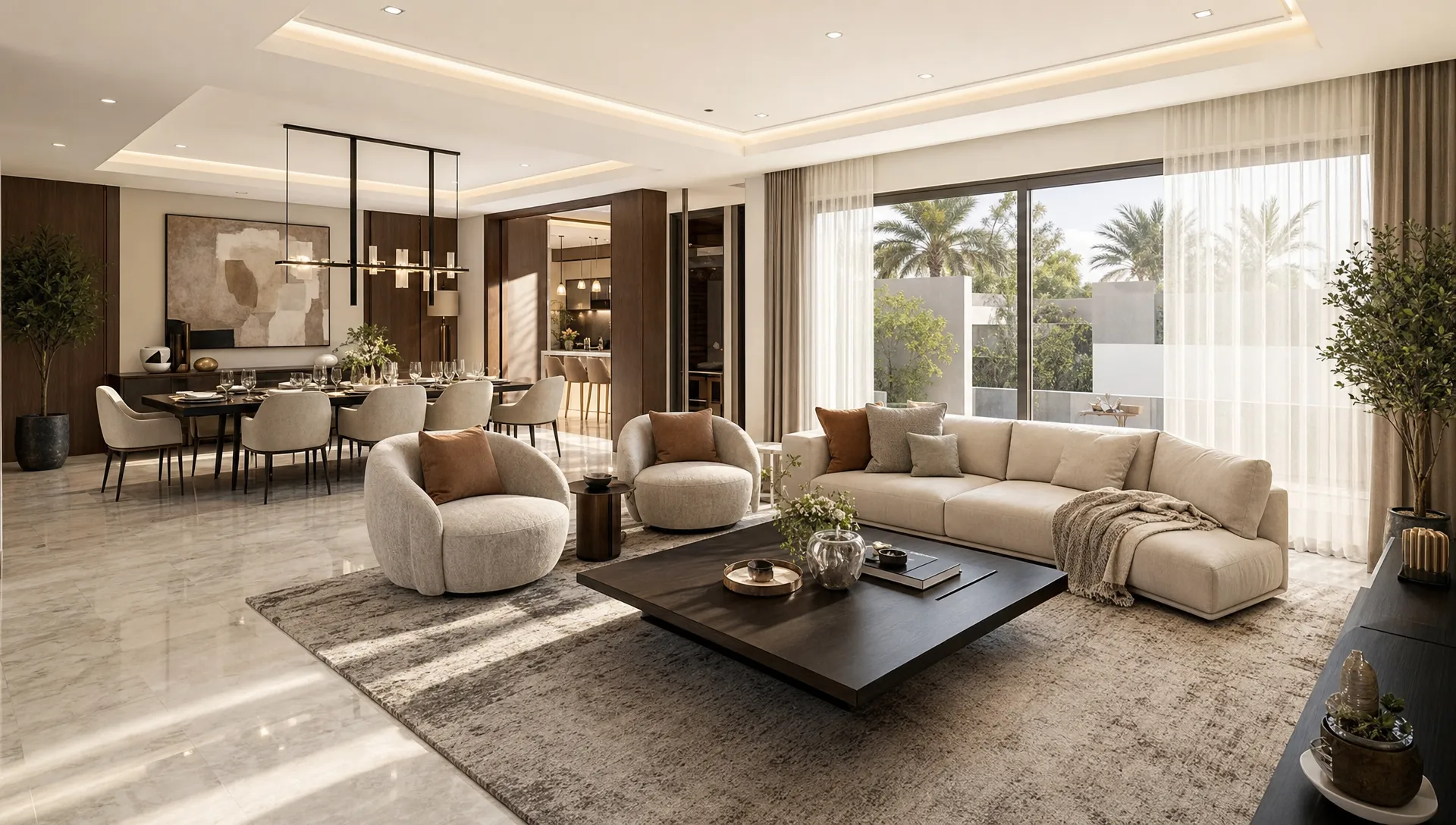
A better approach is often “controlled openness.” This means opening the main living and dining areas while still preserving privacy for bedrooms, kitchens, family lounges, and guest zones. Sliding glass partitions, decorative screens, fluted panels, archways, and pocket doors can separate spaces without making the home feel closed off.
For villas, consider a layered layout: a welcoming entrance, a formal guest reception area, a family living zone, and a more private upstairs or rear section. For apartments, use furniture placement, rugs, ceiling details, and lighting to define zones instead of building too many walls. The result is a home that feels spacious but still practical for UAE family life.
Choose Materials That Handle Heat, Humidity, and Daily Use
Interior remodeling in the UAE should always account for climate and maintenance. Bright sunlight, air conditioning, humidity in bathrooms, sand, and frequent cleaning can affect materials over time. Choosing finishes only because they look attractive in photos can lead to fading, warping, staining, or high maintenance.
Porcelain tiles, engineered stone, treated wood, moisture-resistant boards, washable paints, and quality hardware are often smart choices for long-lasting interiors. Natural materials can still work beautifully, but they need the right specification, sealing, and installation.
| Remodeling area | Smart material direction | Why it works in UAE homes |
|---|---|---|
| Flooring | Large-format porcelain, stone-look tiles, engineered wood in selected areas | Durable, easy to clean, and suitable for high-traffic rooms |
| Walls | Washable paint, microcement, textured panels, moisture-resistant cladding | Adds character while remaining practical for daily maintenance |
| Kitchens | Quartz, sintered stone, porcelain surfaces, moisture-resistant cabinetry | Handles heat, spills, and regular cleaning better than delicate finishes |
| Bathrooms | Anti-slip porcelain, sealed stone, glass partitions, quality waterproofing | Reduces maintenance issues in humid wet areas |
| Joinery | Laminates, veneers, treated MDF, hardwood accents | Allows custom storage with a polished modern finish |
The goal is not to avoid luxury materials. It is to use them in the right places. A marble feature wall in a formal area may be ideal, while a lower-maintenance porcelain surface might be better for a busy family kitchen.
Use Lighting as a Design Feature
Lighting can completely change how an interior feels. In many older UAE homes, lighting is either too bright and flat or limited to a single central fixture in each room. Modern remodeling should use layered lighting instead.
A layered lighting plan usually combines ambient lighting, task lighting, accent lighting, and decorative fixtures. Cove lighting can soften ceilings, wall washers can highlight textured surfaces, pendant lights can define dining areas, and under-cabinet lighting can make kitchens more functional.
Warm white lighting usually works well in living rooms, bedrooms, and dining areas because it feels relaxed and welcoming. Cooler task lighting can be useful in kitchens, laundries, dressing rooms, and workspaces. Dimmers are also valuable because they allow the same room to shift from bright family use to softer evening ambience.
Ceiling design should support the lighting plan rather than overpower it. Instead of overly complex gypsum ceilings, consider clean recesses, subtle coves, shadow gaps, and linear lighting that give a modern architectural effect.
Remodel the Kitchen Around Real Cooking Habits
Kitchens are often the heart of modern UAE homes, but not every household uses the kitchen in the same way. Some families need a show kitchen for entertaining and a separate closed cooking area for heavier meal preparation. Others prefer one open kitchen that connects to the dining and living space.
If your kitchen is part of a broader interior remodeling project, focus on workflow first. The refrigerator, sink, cooking area, pantry, and preparation surfaces should be arranged so the space feels effortless to use. Storage should extend vertically where possible, and corner spaces should be planned carefully to avoid wasted cabinetry.
Modern kitchen remodeling ideas include handleless cabinets, concealed appliances, breakfast counters, built-in pantry walls, integrated lighting, durable countertops, and easy-clean backsplashes. For more detailed kitchen planning, Renovate UAE’s guide to kitchen home improvement ideas for modern UAE homes explores layouts, storage, materials, ventilation, and smart upgrades in more depth.
Give Bathrooms a Spa-Like but Practical Upgrade
Bathroom remodeling is one of the most effective ways to modernize a UAE home. A dated bathroom can make the whole property feel older, while a clean, well-lit bathroom with quality fittings adds a strong sense of comfort and value.
The best modern bathroom designs combine hotel-style elegance with practical waterproofing and ventilation. Walk-in showers, wall-mounted vanities, concealed cisterns, recessed niches, backlit mirrors, and frameless glass partitions can make even compact bathrooms feel more refined.
Pay close attention to wet and dry zones. If water constantly spreads across the floor, the bathroom will never feel truly comfortable. Proper slopes, quality drainage, anti-slip tiles, and well-positioned glass partitions make a major difference. Good ventilation is equally important, especially in bathrooms that do not have strong natural airflow.
Build Storage Into the Architecture
Storage is one of the most overlooked parts of interior remodeling. A home can have beautiful finishes, but if everyday items have nowhere to go, the space quickly feels cluttered.
Modern UAE homes benefit from built-in storage that looks like part of the architecture. Floor-to-ceiling wardrobes, concealed shoe cabinets, pantry walls, laundry cupboards, under-stair storage, media walls, and custom vanities can keep daily life organized without adding visual noise.
In villas, entry storage is especially useful because families often need space for shoes, bags, school items, sports equipment, and guest essentials. In apartments, every centimeter matters, so custom carpentry can transform awkward corners, corridors, and wall recesses into practical storage.
A good remodeling plan should identify storage needs room by room before carpentry drawings are finalized. This avoids the common mistake of installing attractive cabinets that do not actually fit the household’s belongings.
Refresh Walls With Texture, Not Excess Decoration
Modern UAE interiors are moving away from heavy decoration and toward refined texture. Instead of filling every wall with bold patterns, consider a more balanced palette using stone, wood, fabric panels, microcement, fluting, limewash-style paint, or subtle wallpaper.
A textured feature wall behind the TV, bed, or dining area can create a focal point without overwhelming the room. In formal spaces, stone cladding or bookmatched slabs can create a luxurious effect. In bedrooms, upholstered panels or warm wood can make the space feel calm and comfortable.
The key is restraint. If every wall becomes a feature wall, the interior can feel busy. Choose one or two statement surfaces, then let the rest of the room support them with simpler finishes.
Upgrade Flooring for a Cleaner, Larger Look
Flooring has a major influence on how spacious and modern a home feels. In many renovation projects, replacing small, dated tiles with larger-format flooring instantly makes the interior look cleaner and more contemporary.
Large-format porcelain tiles are popular in UAE homes because they are durable, low-maintenance, and available in marble, stone, concrete, and wood effects. Light beige, greige, warm grey, and soft stone tones can brighten interiors while remaining practical.
For bedrooms, some homeowners prefer engineered wood or high-quality laminate for a warmer feel underfoot. If you choose wood-look flooring, make sure it suits the room’s moisture conditions and maintenance expectations. In high-traffic family areas, durability should always guide the final decision.
Consistent flooring across connected spaces can also make the home feel larger. If every room has a different floor finish, the interior may feel fragmented. A more unified approach gives a calmer and more expensive-looking result.
Add Smart Home Features Where They Actually Help
Smart home upgrades can make modern UAE interiors more comfortable, but they should be selected carefully. The goal is convenience, not complexity.
Useful smart features often include lighting controls, dimmers, automated curtains, smart thermostats, video intercoms, security cameras, leak sensors, and motion lighting in corridors or wardrobes. In larger villas, centralized control can simplify daily routines, especially for lighting and air conditioning.
However, smart systems should be planned during the remodeling stage, not added as an afterthought. Wiring, switch locations, Wi-Fi coverage, ceiling access, and control panels need to be coordinated before finishes are installed. This is especially important when remodeling villas, large apartments, or homes with multiple floors.
Smart upgrades are most successful when they feel invisible. A well-designed system should make the home easier to live in without turning every simple action into a technical task.
Make the Entrance Feel Intentional
The entrance sets the tone for the entire home. In UAE villas especially, the foyer is often an important transition between the outside world and the private interior. A thoughtful entrance remodel can make a strong first impression without requiring a full-home transformation.
Ideas include a statement console, textured wall panels, a sculptural mirror, concealed shoe storage, warm lighting, and a refined flooring inlay. If space allows, a seating bench can make the entrance more practical for families and guests.
For apartments, the entrance may be smaller, but it can still feel elevated. A slim storage cabinet, vertical mirror, wall light, and durable floor finish can turn a narrow entry into a polished arrival zone.
Design Bedrooms for Calm, Not Just Luxury
Modern bedroom remodeling should focus on rest. While dramatic headboards and luxury finishes can look impressive, the most successful bedrooms usually feel calm, soft, and uncluttered.
Choose a soothing palette, comfortable lighting, blackout curtains, quality wardrobes, and bedside controls that make daily use easy. Wall-mounted reading lights can free up bedside table space. Built-in dressing areas can reduce clutter. Soft textures, such as rugs, upholstered panels, and layered curtains, help absorb sound and create a more peaceful atmosphere.
Children’s bedrooms should be flexible. Instead of designing around a theme that may feel outdated quickly, use durable built-ins, practical study areas, and adaptable colors that can evolve as the child grows.
Consider Property Type Before Choosing Ideas
The best interior remodeling ideas depend on whether you live in a villa, apartment, townhouse, or penthouse. A design that works beautifully in a large villa may not be practical in a compact apartment.
| Property type | Remodeling focus | High-impact ideas |
|---|---|---|
| Villa | Space planning, guest areas, luxury finishes, indoor-outdoor flow | Majlis upgrades, staircase redesign, custom joinery, feature lighting |
| Apartment | Storage, visual space, acoustic comfort, efficient layouts | Built-in cabinets, open kitchen improvements, light flooring, compact bathrooms |
| Townhouse | Family function, durable finishes, flexible rooms | Multi-use living areas, laundry storage, children’s zones, patio connection |
| Penthouse | Views, entertaining, premium finishes, lighting control | Statement living areas, smart curtains, spa bathrooms, integrated bar or pantry |
If your project involves multiple rooms or major layout changes, it may help to review a broader full house remodeling guide for UAE homeowners before finalizing the scope.
Avoid Overbuilding the Interior
One of the biggest renovation mistakes is overbuilding, which means spending heavily on features that do not improve comfort, function, or resale value. Not every wall needs expensive cladding, not every ceiling needs complex detailing, and not every room needs custom furniture.
A modern home usually feels more luxurious when the design is edited well. Invest in the areas that matter most: layout, lighting, flooring, kitchens, bathrooms, storage, and high-touch finishes. Then use decoration, furniture, and accessories to add personality.
Overbuilding can also make future maintenance harder. Highly customized details may be expensive to repair or replace later. A balanced design gives you a home that feels refined today and remains adaptable in the future.
Plan the Renovation Sequence Carefully
Interior remodeling often involves many trades, including civil work, electrical, plumbing, HVAC coordination, carpentry, tiling, painting, and finishing. The sequence matters. If design decisions are unclear, contractors may need to redo work, which increases cost and delays.
A practical remodeling sequence usually begins with inspection and measurements, then concept design, material selection, technical drawings, approvals if required, demolition, rough-in services, ceiling and wall work, flooring, carpentry, painting, fixture installation, and final snagging.
For apartments and villas in managed communities, check whether you need building management approval, owners association approval, developer NOC, or municipality-related permits for certain works. Structural changes, plumbing relocations, facade changes, and major electrical upgrades should always be handled professionally.
Renovate UAE provides renovation services across villas, homes, apartments, and commercial spaces, including interior design solutions, civil work, electrical and plumbing, carpentry, painting, kitchen and bathroom upgrades, and landscaping. For homeowners who want design and execution under one plan, professional coordination can make the difference between a stressful project and a smooth transformation.
Work With a Cohesive Interior Design Direction
A remodel becomes more successful when every room follows a shared design language. This does not mean every space must look identical. It means the materials, colors, lighting, and details should feel connected.
For example, you might use a warm neutral palette throughout the home, then vary the textures by room. The living area may include stone and wood, the bedrooms may include softer fabrics, and the bathrooms may use porcelain and brushed metal finishes. This gives each room personality while keeping the overall home cohesive.
If you are still shaping your preferred style, Renovate UAE’s page on interior designing ideas and services can help you think through furniture, window treatments, lighting, and luxury interior details before the renovation begins.
Frequently Asked Questions
What are the best interior remodeling ideas for UAE homes? The best ideas usually include open but private layouts, durable flooring, layered lighting, smart storage, upgraded kitchens, spa-style bathrooms, and climate-suitable materials. The right choices depend on your property type, lifestyle, and budget.
How do I make my UAE home look more modern without a full renovation? Start with high-impact updates such as repainting, changing lighting, upgrading flooring, adding built-in storage, replacing outdated doors or handles, and refreshing the entrance. Kitchens and bathrooms usually deliver the strongest visual improvement.
Which materials are best for interior remodeling in the UAE? Porcelain tiles, quartz or sintered stone countertops, moisture-resistant cabinetry, washable paints, treated wood, and quality bathroom waterproofing systems are often practical choices because they handle heat, humidity, cleaning, and daily wear well.
Do I need approvals for interior remodeling in Dubai or the UAE? It depends on the property, emirate, community, and scope of work. Cosmetic updates may be simple, but structural changes, plumbing relocations, electrical upgrades, and apartment renovations often require approvals from building management, developers, or relevant authorities.
How long does an interior remodeling project take? Timelines vary based on scope, material availability, approvals, and property size. A single-room refresh may be relatively quick, while a full villa or apartment remodel can take significantly longer because it involves multiple trades and staged work.
Transform Your UAE Home With a Thoughtful Remodel
Interior remodeling should make your home more beautiful, but it should also make daily life easier. The strongest results come from combining smart planning, durable materials, refined design, and skilled execution.
If you are planning a villa, apartment, home, or commercial renovation in the UAE, Renovate UAE can help you explore customized renovation solutions, modern finishes, and practical upgrades for your space. You can request a free site visit and estimate to understand what is possible before committing to your project.