


A bathroom renovation is one of the most detail-sensitive upgrades you can make in a UAE home. It is not just about choosing beautiful tiles or a modern vanity. The finished space must handle daily moisture, drainage, ventilation, electrical safety, storage, lighting, and family routines without causing leaks or disruption later.
That is why planning bathroom renovations with the right team matters as much as the design itself. A skilled contractor can help you turn a rough idea into a practical scope, identify hidden technical risks, coordinate trades, and keep the project moving from demolition to handover.
If you have been searching for bathroom renovations near me, the goal should not be to choose the first available team. The better approach is to understand what a reliable renovation team should do, what you need to prepare, and how to compare options before work begins.
Start With a Clear Renovation Goal
Before speaking to contractors, define what you want the bathroom to achieve. Many renovation problems begin because the homeowner and contractor are not aligned on the purpose of the project.
A guest powder room may need a premium visual upgrade, while a family bathroom needs durability, storage, easy cleaning, and safe access. A master bathroom in a villa may involve a larger layout change, double vanity, walk-in shower, freestanding tub, or luxury finishes. An apartment bathroom may have stricter building limitations, shared drainage points, and management approval requirements.
Your renovation goal should answer a simple question: what is not working now, and what must be better after the renovation?
Useful points to define include:
- The main problems, such as leaks, poor layout, old tiles, weak water pressure, lack of storage, or outdated lighting.
- The level of renovation, such as cosmetic refresh, fixture replacement, full remodeling, or luxury upgrade.
- Your preferred style, such as minimalist, hotel-inspired, warm contemporary, classic, or spa-like.
- Your practical needs, such as more storage, easier cleaning, better ventilation, slip-resistant flooring, or child-friendly fixtures.
- Your timeline, especially if you are living in the home during the work.
A clear brief helps the team recommend the right scope instead of guessing. It also makes quotation comparisons more accurate because each contractor is responding to the same requirements.
Know Who Should Be on the Bathroom Renovation Team
A bathroom renovation requires multiple skills. Even a small bathroom can involve demolition, civil work, waterproofing, plumbing, electrical changes, tiling, carpentry, painting, glass installation, and final snagging.
The right team should not treat these as separate tasks with no coordination. One mistake in sequence can create delays or defects. For example, installing tiles before testing waterproofing can lead to expensive rework. Moving a vanity without confirming plumbing routes can affect drainage. Choosing lighting without checking electrical load and wet zone safety can create compliance and safety concerns.
| Team role | What they handle | Why it matters |
|---|---|---|
| Project lead or renovation contractor | Scope, scheduling, trade coordination, quality control | Keeps the project organized and accountable |
| Designer or space planner | Layout, finishes, storage, lighting concept | Ensures the bathroom is beautiful and usable |
| Civil team | Demolition, wall preparation, screeding, tile base | Creates the foundation for a clean finish |
| Plumber | Water supply, drainage, mixers, sanitaryware installation | Prevents leaks, poor pressure, and drainage issues |
| Electrician | Lighting, exhaust fan, shaver socket, mirror light, safe wiring | Improves function while protecting wet areas |
| Tiler and waterproofing specialist | Waterproofing layers, tile installation, grout, slopes | Protects the structure and affects final appearance |
| Carpenter or joinery team | Vanity, cabinets, shelving, storage units | Maximizes space and supports a custom finish |
When you interview contractors, ask how they coordinate these roles. A professional team should be able to explain the sequence of work, who supervises the site, and how quality checks are handled.
Choose a Team With Local UAE Experience
Bathroom renovations in the UAE have specific conditions that a general contractor may underestimate. High humidity, frequent AC use, hard water, villa plumbing layouts, apartment building rules, and luxury finish expectations all influence the planning process.
Local experience is especially important for:
- Understanding building management rules in Dubai apartments and communities.
- Planning work hours and access in occupied buildings.
- Selecting materials that suit UAE moisture and temperature conditions.
- Coordinating with suppliers for sanitaryware, tiles, mixers, lighting, and glass.
- Managing villa layouts where bathrooms may be linked to larger renovation works.
If your project is in Dubai, it is worth reviewing guidance on choosing bathroom remodeling contractors in Dubai so you know what to ask before you commit.
A nearby team can be helpful, but proximity alone is not enough. The better question is whether the contractor has handled similar bathroom types, understands local requirements, and can provide a structured renovation process.
Ask for a Site Visit Before Finalizing the Scope
Photos and measurements are useful, but they cannot replace a proper site visit. Bathrooms often hide issues behind tiles, under floors, or inside ceiling voids. A contractor needs to inspect the existing condition before giving a serious recommendation.
During a site visit, the team should review the bathroom layout, plumbing points, drainage slope, water pressure, ventilation, electrical locations, access constraints, and the condition of walls and floors. They should also ask how the bathroom is used, how many people use it, and what improvements matter most to you.
A site visit is also your opportunity to evaluate the contractor. Notice whether they take measurements, ask practical questions, explain potential limitations, and discuss options clearly. A rushed visit often leads to a vague quotation.
For budget clarity, the process described in getting an accurate bathroom renovation estimate is a useful reference, especially if you want to avoid surprises once demolition begins.
Plan the Technical Work Before the Finishes
It is natural to get excited about marble-effect tiles, brushed gold mixers, backlit mirrors, and floating vanities. However, technical planning should come first. The best finishes will not compensate for poor waterproofing, bad drainage, weak ventilation, or unsafe electrical placement.
A dependable renovation team should discuss the technical foundation before confirming the final design.
Waterproofing
Waterproofing is one of the most important parts of a bathroom renovation. Ask what waterproofing system will be used, where it will be applied, and how it will be tested before tiling. Wet areas such as shower floors, walls around showers, and floor junctions need careful treatment.
Drainage and floor slope
A beautiful shower can become frustrating if water pools on the floor. The contractor should plan floor levels, drain placement, shower partitions, and slopes before tile installation. This is especially important for walk-in showers and large-format tiles.
Plumbing and water pressure
If you are changing the location of the toilet, shower, bathtub, or vanity, plumbing feasibility must be checked early. Some changes are simple, while others require more civil work or may be restricted by existing drainage routes.
Ventilation
Poor ventilation can lead to mold, odors, and damage to paint, ceilings, and cabinetry. Your team should assess whether the current exhaust system is adequate and whether upgrades are needed.
Electrical safety and lighting
Bathrooms need layered lighting, but electrical planning must respect wet areas. Mirror lights, recessed ceiling lights, LED strips, shaver sockets, and exhaust fans should be positioned with safety and maintenance in mind.
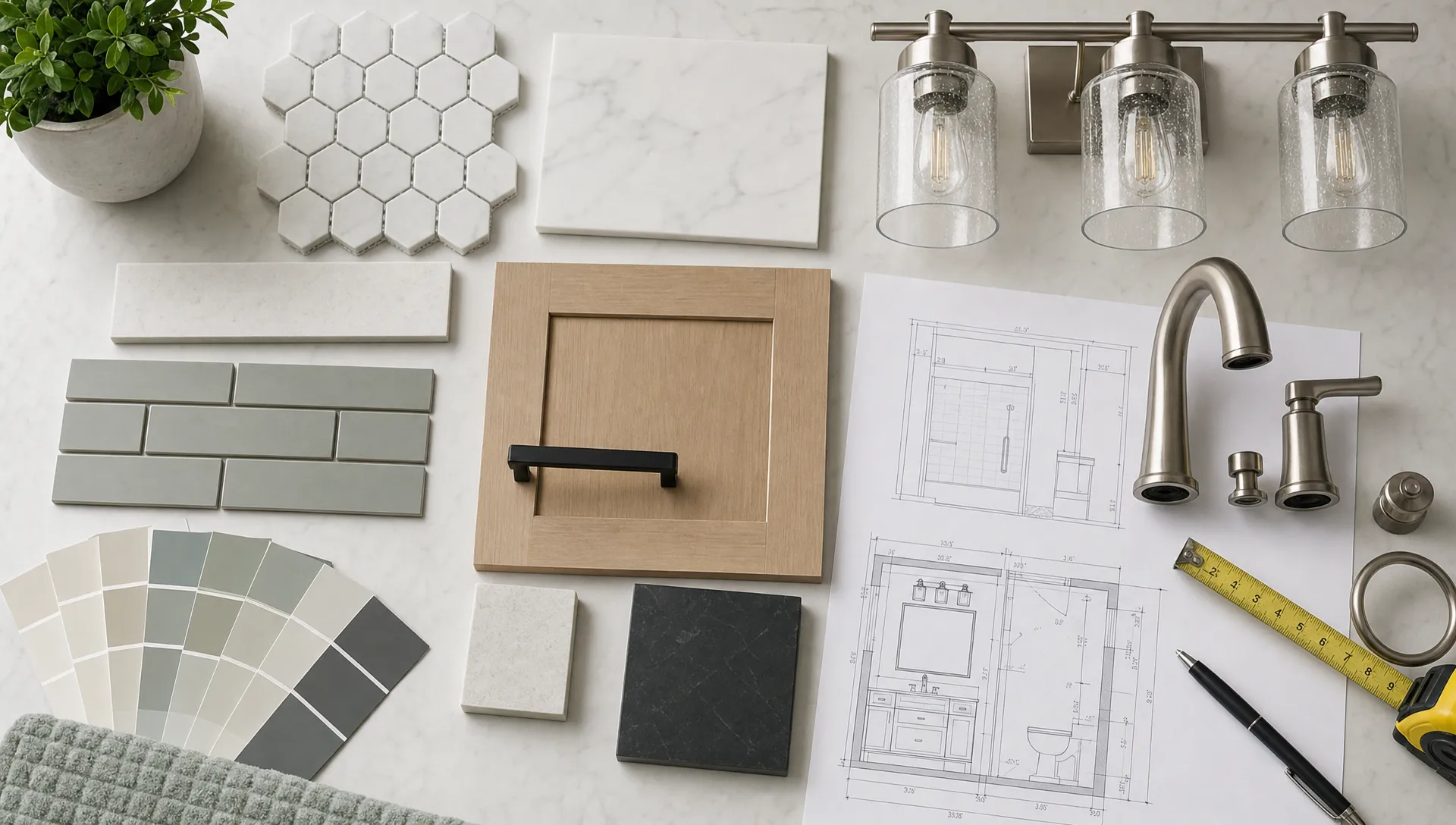
Compare Quotations Based on Detail, Not Just Price
A low quotation can be tempting, but it may exclude important work. Bathroom renovations are vulnerable to hidden cost gaps because many tasks happen behind the finished surface. If one quote includes waterproofing, plumbing modifications, tile adhesive, debris removal, and supervision while another quote does not, the lower number may not be a better deal.
A professional bathroom renovation quotation should be itemized enough for you to understand what is included and what is excluded.
| Quote item | What to check | Why it affects the project |
|---|---|---|
| Demolition and removal | Whether old tiles, sanitaryware, and debris disposal are included | Prevents unexpected labor and disposal costs |
| Civil preparation | Screeding, wall repair, blockwork, floor leveling | Impacts tile finish and long-term durability |
| Waterproofing | Product type, application area, testing approach | Reduces risk of leaks and rework |
| Plumbing | New lines, drainage changes, fixture installation | Affects performance and future maintenance |
| Electrical | Lighting points, fan wiring, mirror power, socket placement | Supports safety and daily convenience |
| Tiling | Tile size, pattern, grout, edge trims, labor quality | Shapes the final appearance |
| Sanitaryware and fixtures | Supply by contractor or client, brand allowances, installation | Clarifies responsibility and budget |
| Vanity and storage | Ready-made or custom, material, hardware | Determines function and durability |
| Timeline | Start date, work sequence, expected duration | Helps you plan around disruption |
When comparing quotations, ask each team to clarify assumptions. If you plan to supply your own tiles or fixtures, confirm who is responsible for delivery, damage checks, storage, installation compatibility, and warranty coordination.
Align the Design With Daily Living
A bathroom should look beautiful, but it also needs to work every morning and evening. Good planning considers how people move, where towels are stored, where toiletries sit, how easy the shower is to clean, and whether lighting works for grooming.
This is where the right team adds real value. Instead of simply installing what you request, they should help you refine the layout. A floating vanity may make a small bathroom feel larger, but it needs enough drawer space. A glass shower screen may look elegant, but it should be positioned so water does not splash across the floor. A niche in the shower can reduce clutter, but it needs proper waterproofing and tile alignment.
For homeowners thinking beyond appearance, it helps to consider how bathroom renovation services improve daily routines through layout, storage, safety, and practical material choices.
Set a Realistic Timeline and Work Sequence
Bathroom renovation timelines depend on the size of the space, the scope of work, material availability, approvals, and whether structural or plumbing changes are involved. A cosmetic refresh may be quicker than a full remodel that includes demolition, waterproofing, plumbing rerouting, custom vanity work, and glass installation.
Your contractor should explain the work sequence before starting. A typical full bathroom renovation may move through demolition, inspection, plumbing and electrical rough-in, civil preparation, waterproofing, testing, tiling, fixture installation, vanity or joinery installation, painting, glass fitting, cleaning, and snagging.
Delays often happen when materials are not selected early. Tiles, sanitaryware, mixers, drains, mirrors, lights, and vanity finishes should be confirmed before the team reaches the installation stage. If you are ordering imported or specialty items, build extra time into the plan.
Also discuss whether you can use another bathroom during the work. In villas, this may be easier. In apartments with only one bathroom, scheduling and temporary arrangements need more care.
Clarify Communication and Site Supervision
Even with a strong plan, communication can make or break the renovation experience. You should know who your main contact is, how updates will be shared, and how decisions will be documented.
Before work starts, agree on:
- The project contact person and site supervisor.
- The expected working hours and access arrangements.
- How variation requests will be priced and approved.
- How material selections will be confirmed.
- How finished work will be inspected before handover.
Changes are common in renovations, especially after demolition reveals hidden conditions. The issue is not whether changes happen, but whether they are handled transparently. Any change affecting cost, timeline, or design should be confirmed before the work proceeds.
Watch for Red Flags Before You Hire
Choosing the wrong team can lead to delays, poor workmanship, leaks, unfinished details, and budget disputes. A reliable contractor should make you feel informed, not pressured.
Be cautious if a team avoids a site visit, gives only a lump-sum price with no detail, cannot explain waterproofing, dismisses ventilation or drainage concerns, pushes you to start immediately without planning, or refuses to clarify exclusions.
Also be careful with contractors who focus only on the visible finishes. In bathroom renovations, what you cannot see after completion is often what matters most. Waterproofing, pipe connections, slopes, wall preparation, and electrical safety determine whether the bathroom performs well over time.
Prepare Your Home Before Work Begins
Once you choose the team, preparation helps the project run smoothly. Remove personal items from the bathroom, clear access paths, protect nearby furniture where needed, and confirm parking or service elevator rules if you live in an apartment building.
If you are staying in the property, ask how dust, noise, and debris will be managed. Renovation work is disruptive by nature, but a professional team should have a plan for site protection, waste removal, and daily organization.
You should also finalize selections before demolition begins whenever possible. Last-minute changes to tile size, drain type, vanity dimensions, or mixer style can affect plumbing, tile cuts, and delivery schedules.
Inspect the Bathroom Carefully at Handover
The final inspection is your chance to check the bathroom before the team leaves site. Do not focus only on whether the space looks complete. Test the details.
Run the shower and taps, check drainage, open and close vanity drawers, inspect silicone lines, look at grout consistency, test lighting and exhaust fans, check mirror placement, confirm accessories are secure, and review any maintenance advice. If you notice issues, document them clearly and agree on a snagging plan.
A good renovation team will expect this stage. Professional handover is not just about finishing the work, it is about making sure the bathroom is ready for daily use.
Frequently Asked Questions
How do I choose the right team for bathroom renovations? Look for a team with UAE renovation experience, clear site assessment practices, detailed quotations, waterproofing knowledge, plumbing and electrical coordination, and a structured handover process.
Should I hire separate trades or one renovation contractor? For most homeowners, one coordinated renovation contractor is easier because bathrooms require several trades working in the correct sequence. Separate trades can work, but you will need to manage scheduling, quality control, and responsibility yourself.
What should I ask during a bathroom renovation site visit? Ask about waterproofing, drainage, plumbing feasibility, ventilation, electrical safety, material options, timeline, access requirements, and what is excluded from the quotation.
Why do bathroom renovation quotes vary so much? Quotes vary because contractors may include different scopes, material allowances, waterproofing systems, plumbing changes, tile installation details, supervision levels, and debris removal. Always compare itemized details, not just the final price.
Can I renovate a bathroom in an apartment in Dubai? Yes, but apartment renovations may require building management approvals, work-hour restrictions, service elevator booking, and careful coordination around existing plumbing and drainage points.
Plan Your Bathroom Renovation With Confidence
The right bathroom renovation team will help you make better decisions before work begins. They will inspect the site, plan the technical details, guide material choices, coordinate trades, and deliver a bathroom that suits your home and daily routine.
If you are planning a bathroom renovation in Dubai or elsewhere in the UAE, Renovate UAE provides customized renovation solutions for homes, villas, apartments, and commercial spaces, including bathroom upgrades, plumbing, electrical, civil work, carpentry, painting, and interior design support. You can request a free site visit and estimate to understand the right scope for your space before committing to the project.