


Choosing a bathroom remodel contractor is a high trust decision, especially in the UAE, where a bathroom has to handle daily use, high humidity, strict building rules, and the expectations that come with a polished home. The best contractor is not simply the one who can start next week. It is the team that understands your lifestyle, explains the technical risks clearly, and gives you a written scope you can actually compare.
When homeowners search for bathroom remodel contractors near me, they often get a long list of names that all sound similar. Confidence comes from narrowing that list with a simple process: clarify your brief, check wet area expertise, compare quotes line by line, and choose the contractor who reduces uncertainty rather than adding to it.
Define the result before you ask for prices
Before speaking with contractors, write a short project brief. This does not need to be complicated, but it should capture the decisions that affect price, timing, and workmanship. A contractor cannot price accurately if your requirements are vague, and vague quotes often lead to variations later.
Your brief should answer these questions:
- Is this a cosmetic refresh, a full bathroom remodel, or a layout change?
- Will plumbing points, drainage, electrical points, or walls move?
- Which items are staying, such as bathtub, vanity, tiles, WC, mixer, shower glass, lighting, or storage?
- Are you aiming for a luxury hotel feel, a family-friendly space, better accessibility, or easier maintenance?
- Do you already have materials in mind, or do you need design and product guidance?
- Are there access restrictions, working-hour rules, or approval requirements in your building or community?
This brief helps you judge whether a contractor is listening. Good bathroom remodel contractors ask follow-up questions about how you use the space, not only about square meters and tile size. If your bathroom is part of a larger upgrade, it may also help to review what to expect from a broader renovation contractor before you separate the bathroom scope from the rest of the home.
Shortlist for fit, not just proximity
Local access matters, but proximity is not the only thing that makes a contractor suitable. A nearby handyman may be fine for minor repairs, but a bathroom remodel combines demolition, waterproofing, plumbing, electrical work, tiling, carpentry, painting, and finishing coordination. You need a team that can manage those trades in the right sequence.
Look for contractors who can show experience with bathrooms similar to yours. A villa master bathroom with a walk-in shower, built-in niches, and custom vanity requires different planning from a compact apartment bathroom where pipe routes and building approvals may be more restrictive. In Dubai, the type of property can also affect working permits, building management approvals, service elevator access, and waste removal arrangements. For a more location-focused checklist, Renovate UAE has a Dubai-specific guide to choosing bathroom remodeling contractors that covers several local considerations.
A strong shortlist usually includes two or three serious contractors. More than that can make the process noisy, especially if each company is pricing a different version of the project.
Treat the first conversation as a screening test
The first call or message tells you a lot. Contractors who rush straight to a price without seeing the bathroom may not be allowing for hidden conditions. Contractors who ask for photos, measurements, property type, layout goals, and current problems are usually thinking more carefully.
Use these questions to screen your options:
| Question to ask | Why it matters |
|---|---|
| Have you completed similar bathroom remodels in UAE homes? | Relevant experience reduces trial-and-error on site. |
| Who manages plumbing, waterproofing, electrical work, and tiling? | Bathrooms need coordinated trades, not isolated workers. |
| Do you visit the site before finalizing the quote? | A site visit helps identify access, drainage, ventilation, and substrate issues. |
| Can you provide a written scope with inclusions and exclusions? | Written detail makes quotes easier to compare. |
| How do you handle approvals or building management rules? | Some properties require permission before noisy or structural work. |
| How are variations approved? | Clear variation rules protect your budget. |
The goal is not to interrogate the contractor. It is to see whether they communicate clearly, explain risks, and respect the seriousness of wet area work.
Insist on a proper site visit
A bathroom may look simple from the outside, but many important details are hidden behind tiles, ceilings, and cabinets. A site visit allows the contractor to check water pressure, drainage location, existing slopes, wall condition, electrical points, ceiling height, ventilation, access paths, and available storage for materials.
During the site visit, pay attention to what the contractor observes. Do they ask about leaks, odors, slow drainage, mold, loose tiles, cracked grout, or poor ventilation? Do they check whether a shower conversion will require floor build-up or drain relocation? Do they explain how they will protect nearby rooms, lifts, corridors, and common areas?
A contractor who spends time understanding the existing bathroom is more likely to deliver a realistic estimate. A contractor who gives a fixed number in minutes may later discover issues that should have been discussed before work began.
Compare scope before comparing price
A cheaper quote is not always cheaper. It may simply exclude important items. When you compare bathroom remodeling companies, put the quotes side by side and check whether they are pricing the same scope, materials, and responsibilities. Renovate UAE's guide on how to compare bath remodeling companies wisely explores this in more detail, but the principle is simple: compare clarity, not only totals.
A good bathroom remodel quote should make the major cost drivers visible.
| Quote item | What to clarify |
|---|---|
| Demolition and removal | What is removed, how debris is handled, and whether disposal is included. |
| Plumbing work | Whether pipe changes, drainage adjustments, mixers, valves, and testing are included. |
| Electrical work | Lighting, exhaust fan points, shaver sockets, switches, and safety requirements. |
| Waterproofing | Product type, application areas, testing process, and what happens before tiling. |
| Tile installation | Surface preparation, tile size assumptions, pattern, grout type, and edge trims. |
| Sanitaryware and fittings | Whether supply is by homeowner or contractor, and which brands or models are allowed for. |
| Carpentry and vanity work | Material, finish, hardware, and moisture resistance. |
| Glass and accessories | Shower screens, mirrors, towel rails, shelves, niches, and installation details. |
| Painting and finishing | Ceiling paint, door touch-ups, silicone, sealants, and final cleaning. |
| Exclusions | Any item not included, especially approvals, material upgrades, or hidden repairs. |
If one quote includes waterproofing, debris disposal, and shower glass while another excludes them, the lower total is misleading. Ask each contractor to revise the quote into a comparable format before making a decision.
Pay special attention to waterproofing and ventilation
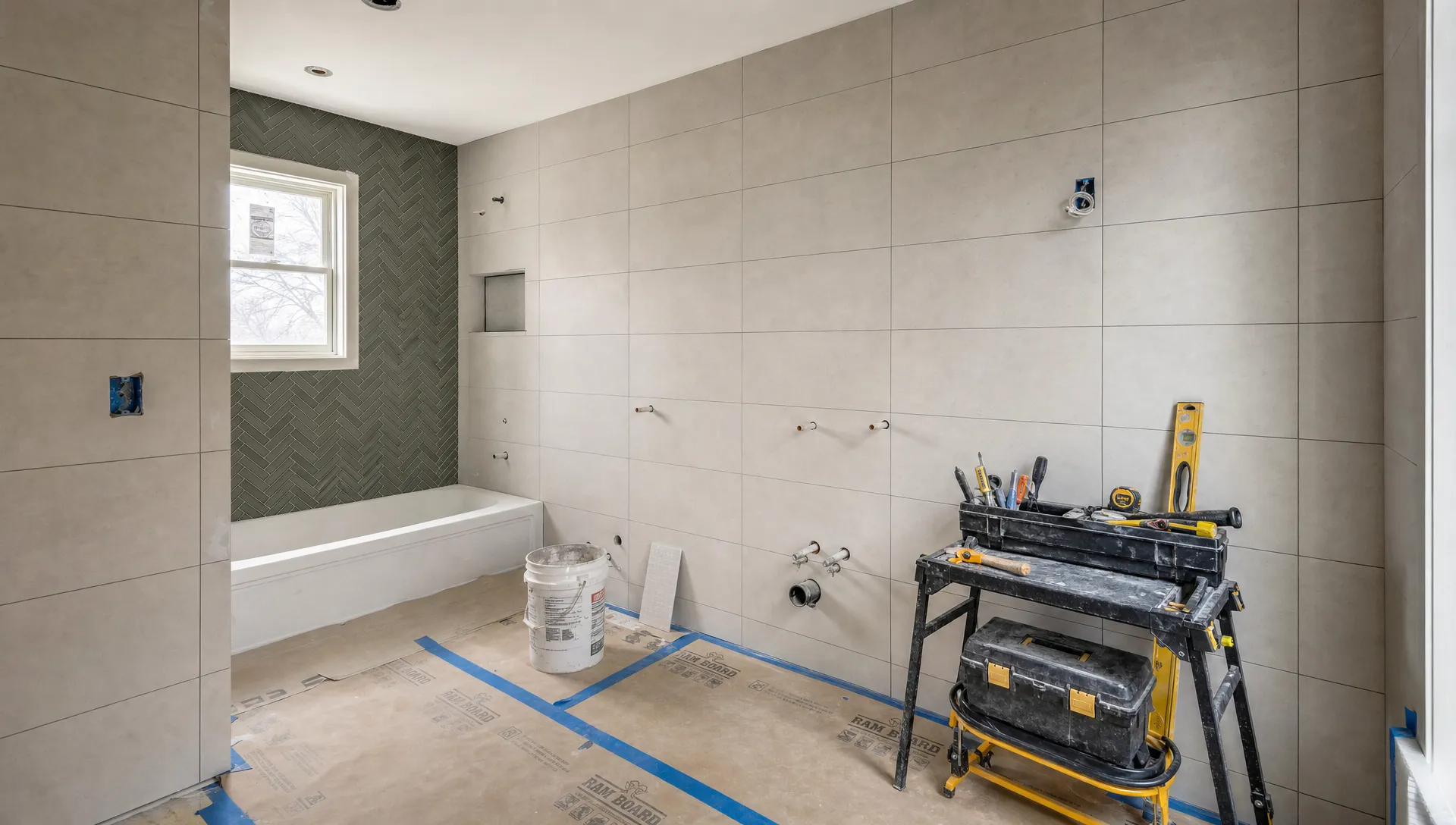
Bathrooms fail most often because of hidden technical mistakes, not because the tile color was wrong. Waterproofing, drainage slope, grout quality, pipe connections, and ventilation determine whether the bathroom will perform well after the renovation is complete.
Ask contractors how they prepare surfaces before waterproofing, which areas receive waterproofing, how corners and joints are treated, and whether water testing is performed before tiles are installed. The exact method can vary depending on the property and materials, but the contractor should be able to explain a coherent process.
Ventilation deserves equal attention. Poor airflow can trap humidity and increase the risk of unpleasant odors, paint damage, and mold growth. The U.S. Environmental Protection Agency notes that controlling moisture is central to controlling mold, which is why bathroom design should consider extraction, sealing, drainage, and drying time, not only finishes.
In UAE homes, where air conditioning and humidity interact, it is worth asking how the remodeled bathroom will stay dry in daily use. A beautiful bathroom that remains damp after every shower will not feel luxurious for long.
Look for evidence of workmanship
Photos are useful, but they are not enough on their own. Ask to see projects similar in style, size, and complexity to yours. Before-and-after images can show design ability, while in-progress images can reveal site discipline, waterproofing preparation, tile alignment, and protection methods.
References can also help, especially if the project involved similar constraints. For example, a contractor who has renovated bathrooms in occupied villas should understand dust control, noise coordination, material storage, and family routines. A contractor who often works in apartments should understand building access, elevator protection, working hours, and management permissions.
If possible, ask how the contractor handles defects after handover. Even good projects can need minor adjustments, such as silicone touch-ups, cabinet alignment, or accessory tightening. What matters is whether the contractor has a clear handover process and responds professionally.
Evaluate communication, not only craftsmanship
Bathroom remodels involve many small decisions. Tile direction, grout color, niche height, mirror placement, shower glass swing, vanity depth, towel rail location, and lighting temperature all affect the final experience. If communication is weak before signing, it usually becomes more stressful during construction.
A reliable contractor should explain who your point of contact will be, how updates will be shared, and how decisions are documented. This is especially important if you are traveling, renovating a rental property, or coordinating a remodel while living in the home.
Look for signs of organized communication: written summaries after site visits, clear drawings or marked photos when needed, itemized quotes, realistic timelines, and prompt answers to technical questions. You do not need a contractor who says yes to everything. You need one who explains what is possible, what is risky, and what will cost more.
Read the contract before paying a deposit
Once you have chosen a preferred contractor, slow down and review the agreement. A contract does not need to be complicated, but it should reduce ambiguity. It should identify the scope of work, materials, responsibilities, payment stages, expected timeline, access requirements, variation process, and handover expectations.
Be careful with large upfront payments that are not tied to clear milestones. It is normal for contractors to require funds for mobilization and material procurement, but payments should make sense in relation to progress. Also confirm who is responsible for purchasing sanitaryware, tiles, mixers, lighting, mirrors, and accessories. If you are supplying items yourself, delays in delivery can affect the contractor's timeline.
Ask what happens if hidden issues appear after demolition. Old plumbing, poor substrate, or previous waterproofing failures may not be visible at the quoting stage. The contract should explain how such discoveries are priced and approved before extra work begins.
Watch for red flags
A confident decision often comes from knowing when to walk away. Some warning signs are obvious, while others are subtle.
- The contractor refuses a site visit but offers a fixed price for a full remodel.
- The quote is one vague line with no breakdown.
- Waterproofing is treated as a minor detail or not mentioned at all.
- The contractor cannot explain who will handle plumbing and electrical work.
- You are pressured to decide immediately with a special price.
- There is no written variation process.
- The timeline sounds unrealistically short for the scope.
- Communication is slow, dismissive, or inconsistent before signing.
One red flag does not always mean a contractor is unsuitable, but several together should make you pause. Bathroom renovations are too technical to rely on trust alone.
Use a simple confidence scorecard
When quotes and conversations start to blur together, score each contractor from 1 to 5 across the factors that matter most. This is not a scientific formula, but it makes your decision less emotional and more structured.
| Decision factor | Low confidence, 1 point | Moderate confidence, 3 points | High confidence, 5 points |
|---|---|---|---|
| Brief understanding | Gives generic answers | Understands most requirements | Clarifies lifestyle, layout, materials, and constraints |
| Site assessment | No visit or very quick look | Basic measurements and photos | Checks access, plumbing, drainage, ventilation, and existing defects |
| Quote clarity | One-line estimate | Some itemization | Detailed scope with inclusions, exclusions, and assumptions |
| Wet area expertise | Minimal waterproofing detail | Basic explanation | Clear process for waterproofing, slopes, joints, and testing |
| Communication | Slow or vague | Acceptable responses | Prompt, organized, and transparent |
| Approval awareness | Ignores property rules | Mentions approvals generally | Discusses likely building or community requirements |
| Evidence | Few examples | General portfolio | Relevant bathroom examples and clear workmanship evidence |
The best choice is not always the highest price or the lowest price. It is the contractor who gives you the most confidence that the finished bathroom will be safe, functional, beautiful, and durable.
Frequently Asked Questions
How many bathroom remodel contractors should I contact? Two or three serious contractors are usually enough if they all visit the site and quote the same scope. Contacting too many can make comparison harder unless your brief is very clear.
Should I choose the cheapest bathroom remodel quote? Not automatically. A low quote may exclude waterproofing, disposal, fittings, glass, approvals, or hidden repair allowances. Compare inclusions and technical detail before judging value.
What should I check when searching for bathroom remodel contractors near me? Check relevant bathroom experience, site visit quality, written scope, waterproofing approach, communication, approval awareness, and clear payment terms. Proximity is useful, but technical reliability matters more.
Do villa and apartment bathrooms need different planning? Yes. Villas may allow more layout flexibility, while apartments often have stricter drainage routes, access rules, and building management requirements. The contractor should understand the property type before pricing.
How long does a bathroom remodel take? It depends on the size of the bathroom, approval requirements, material availability, and whether plumbing or layout changes are involved. Ask for a written timeline with key stages instead of relying on a general promise.
Plan your bathroom remodel with more certainty
The right contractor should make the renovation feel clearer from the first conversation. If you want a team that can assess your bathroom, discuss design goals, and provide a site-based estimate, Renovate UAE offers customized bathroom, home, villa, apartment, and commercial renovation solutions across the UAE, including a free site visit and estimate.
Start with a clear brief, ask the technical questions, and choose the contractor who gives you confidence before the first tile is removed.